
What Should I Expect When Studying Electrical Engineering?
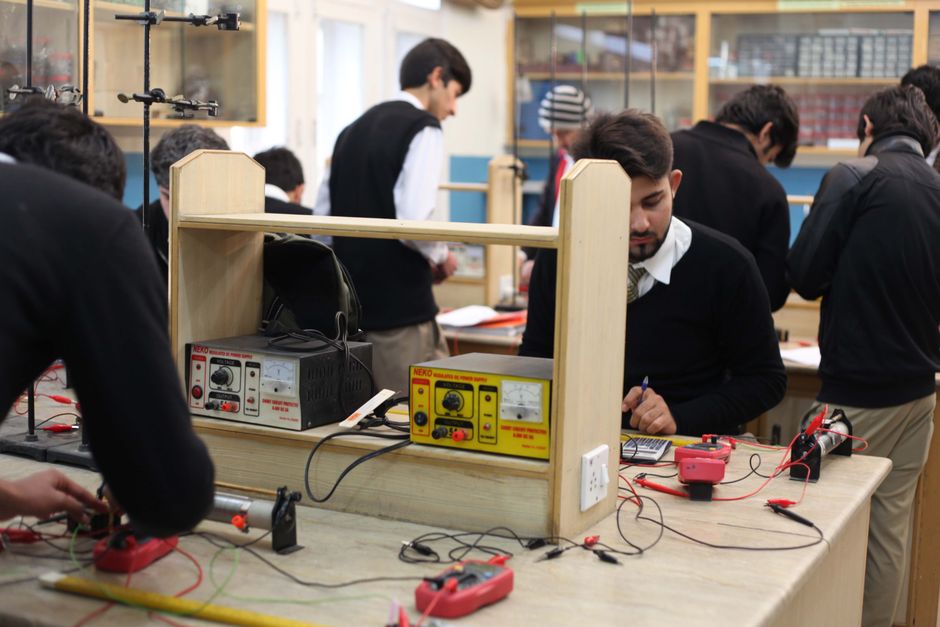
Studying electrical engineering means combining substantial mathematics and physics with programming, circuit analysis, design work, and laboratory courses. Expect lectures and regular independent problem-solving, then use those foundations in increasingly specialized topics such as electronics, signals, power, and controls. Your workload includes more than class time: debugging and writing lab reports take planning, so steady weekly study beats leaving everything until a deadline.
What should I expect when studying electrical engineering?
Expect a degree that moves from shared foundations into specialized engineering work, with laboratory and project experience woven through the plan. Early courses commonly pair calculus, physics, and programming with introductory engineering projects; later courses rely on those foundations rather than repeating them.
The University of Colorado Boulder’s sample curriculum is one concrete example: its B.S. requires 128 semester credit hours, and its first year combines calculus, general physics, programming for electrical engineering, a freshman engineering project course, and experimental physics. Later work includes circuits and electronics, digital logic, probability, design labs, and a two-part senior capstone. That sequence shows the basic pattern: learn a tool, apply it, then use it in a more complex design problem.
The subject list broadens as you progress. UNLV’s EE handbook includes circuits, electronics, electromagnetics, signals and systems, power systems, controls, communications, and laboratory courses. The University of Arkansas catalog describes a similar progression: the first year emphasizes basic science and mathematics, the second and third years develop scientific principles and core EE knowledge, and the fourth year focuses mainly on senior electives. Areas may include communications, control systems, embedded systems, power electronics, renewable energy, and digital circuit design.
A useful way to prepare for the week is to separate three kinds of work: class sessions for new concepts, individual problem-solving to learn how to use them, and laboratory or project time to test and explain a design. These activities overlap, but they are not interchangeable. A lecture may clarify a circuit method; solving problems exposes where your reasoning breaks; a lab forces you to confront how a design behaves in practice.
How much math and physics do electrical engineering students study?
Electrical engineering students study a sustained sequence of mathematics and physical science, beginning with calculus and physics and extending into advanced topics that support later engineering courses. The exact course names and order vary by university, but the math is part of the program’s core, not an optional side track.
ABET’s 2026–2027 Engineering Accreditation Commission criteria require accredited engineering curricula to include at least 30 semester credit hours of college-level mathematics and basic sciences, including experimental experience, and at least 45 semester credit hours of engineering topics. For electrical engineering programs, the criteria specify probability and statistics, mathematics through differential and integral calculus, physical science, and advanced mathematics such as differential equations, linear algebra, complex variables, and discrete mathematics. The ABET accreditation criteria set a useful picture of the breadth involved, though they do not prescribe one identical degree plan for every school.
University plans show how those subjects get distributed. The University of Colorado Denver’s sample plan lists Calculus I, II, and III, linear algebra and differential equations, engineering probability and statistics, General Physics I and II, and a physics lab. It also places programming for EE and digital logic early, before later core courses such as circuits analysis, embedded systems, signal processing, electromagnetic fields, electronics, signals and systems, and energy systems lab.
The connection between prerequisites is practical. Calculus and physics help describe changing electrical quantities and physical behavior; programming gives you a way to model, control, or implement systems. Later courses build on that toolkit. UNLV’s handbook, for example, shows electromagnetics requiring prior circuits, physics, and mathematics, while electronics combines circuit analysis with semiconductor physics and SPICE simulation. If one prerequisite is slipping, treat that as an early signal: review the exact skill, attend office hours or tutoring, and solve a few representative problems before the next course assumes you already have it.
How many hours a week do electrical engineering students spend studying and in labs?
Weekly time depends on your credit load, courses, and how much lab or project work is scheduled, but a useful planning benchmark comes from UNLV: its EE handbook advises about 2–3 hours of study outside class per credit hour each week. For a 16-credit load, the handbook gives 32–48 hours of out-of-class study, or 48–64 hours when class time is included.
Those figures are a planning guide, not a promise that every week will feel identical. A typical schedule divides time among lectures, independent practice, and labs. Problem sets can take longer when a topic is new; a lab may also require time to debug a setup, interpret results, and write a report. Treat the report as a separate task from the lab session, because analysis and clear explanations still need focused time after the experiment ends.
Sample plans underline why calendar discipline matters. The University of Colorado Boulder curriculum shows typical semester loads of 15–18 credits, and the University of Colorado Denver plan schedules 15–18 credits in many semesters. The combination of a full course load and a substantial suggested study commitment means you should map the week before it fills itself.
| Work block | What to schedule | Why it matters |
|---|---|---|
| Class time | Lectures, recitations, and scheduled labs | Introduces methods and provides structured practice. |
| Independent study | Problem sets, reading, review, and programming | Turns a demonstrated method into a skill you can use on your own. |
| Lab follow-through | Preparation, debugging, results, and report writing | Lab work includes documenting and explaining what happened, not only completing the experiment. |
Start with your course credits and the handbook’s study-time range, then block recurring time for problem sets and lab follow-through. Put the hardest work when you can concentrate, and leave room to ask questions before a deadline. Each week, check what is due, what concept is slowing you down, and which block you need to protect next.
Frequently Asked Questions
Which electrical engineering courses tend to be the most difficult?
There is no single hardest course for every student, but courses that combine several foundations can feel demanding. Electromagnetics builds on circuits, physics, and mathematics, while electronics brings circuit analysis together with semiconductor physics and simulation. Review the prerequisites before each term and strengthen gaps early.
How can I keep up with problem sets and lab reports in an EE program?
Start problem sets soon after the related lecture, and break each assignment into smaller work sessions rather than waiting for the deadline. For labs, reserve time for setup, debugging, recording results, and writing; finishing the experiment does not automatically finish the report. If you get stuck, bring a specific question and show what you have tried.
Do I need to be exceptionally good at math to study electrical engineering?
You need to be willing to use mathematics consistently, but you do not need to arrive knowing every advanced topic. Degree plans build from calculus into subjects such as differential equations, linear algebra, probability, and statistics. If a prerequisite is difficult, seek support and practice the exact skills later courses will use.
Before your next week of classes, write down the courses, due dates, and lab follow-through tasks, then block study time against your actual credit load. Mark one prerequisite concept that feels uncertain and give it a focused practice session before it becomes a bottleneck.
Sources
- ABET, Engineering Accreditation Commission
- University of Nevada, Las Vegas Department of Electrical and Computer Engineering
- University of Colorado Boulder College of Engineering & Applied Science
- University of Colorado Denver Department of Electrical Engineering
- University of Arkansas Undergraduate Catalog, Electrical Engineering
Related guides

How Do I Know Whether a Boarding School Fits My Child?
A practical parent framework for comparing boarding schools on readiness, support, costs, campus evidence, and boarding options.

How Can My Child Attend a Highly Rated Texas High School?
A practical guide to Texas high school attendance zones, transfers, magnets, lotteries, transportation, and eligibility.

How Do We Compare International Schools in Switzerland?
Compare Swiss international schools by tuition, hidden fees, curriculum fit, admissions timing, and public-school language support.