
Why Is My Small Puppy Biting Me During Play and Petting?
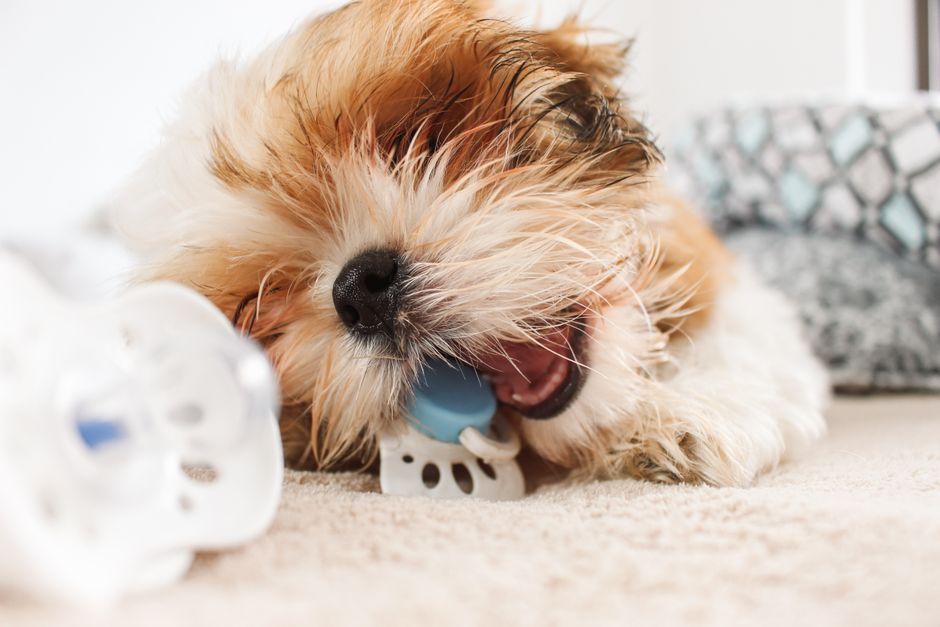
Small-puppy biting is usually normal play, exploration, teething, or overexcitement, not a sign that your puppy is bad or aggressive. End contact the instant teeth touch skin, become still or step away, then offer a safe toy when the puppy settles. Keep hands and clothes out of games, protect rest time, and seek professional help when biting comes with fear, stiffness, or growling during handling.
Why does my little puppy bite me when I try to pet or play with them?
Your puppy usually bites during petting or play because mouths are part of puppy play and investigation. The Merck Veterinary Manual describes play biting and oral behavior as normal canine behavior, even when it hurts or wears down the people nearby.
A small mouth can still make daily handling feel like a trial. Size does not change the rule: hands are not toys. When fingers move, sleeves swing, or ankles retreat, a puppy can read the motion as an invitation to chase, grab, and wrestle.
Play has a rhythm. It rises, then spills over. Merck notes that nipping and biting during play rarely become aggression, though highly aroused play can cause injury and raises risk when the dog's emotional state shifts.
Set up a cleaner game. Use a toy between puppy and person from the first second of play. Keep soft toys, food toys, or a suitable tug toy within reach. VCA veterinary behavior specialists recommend these oral outlets and consistent household rules, because one person allowing hand play teaches a different lesson from another person ending it.
Children need close adult oversight. VCA notes that a child's movement or reaction can invite more chase and play, even when the child is trying to stop the nipping.
Is my puppy biting because they are teething, overstimulated, or aggressive?
Teething, overstimulation, and social play commonly explain puppy biting; aggression calls for a wider reading of the puppy's body language and context. One behavior does not tell the whole story.
Teething often shows up as gnawing on reachable objects. According to VCA Animal Hospitals, puppies have 28 baby teeth, baby teeth begin falling out at about 12 weeks, and permanent teeth normally finish erupting by about 6 months. Chewing helps puppies explore and can ease teething discomfort.
Overstimulation often looks different. The puppy becomes faster, louder, and harder to redirect after active play or handling. The useful response is not a bigger reaction. It is a shorter one: end the game, lower the activity, and give the puppy time to settle.
| Pattern | What it often looks like | First response |
|---|---|---|
| Play or exploration | Relaxed body, bouncing movement, nipping during an active interaction | Stop contact and redirect to a toy |
| Teething | Gnawing on furniture, objects, or hands during the tooth-change period | Offer a supervised, bendable chew toy |
| Overstimulation | Frantic nipping after excitement, movement, or rough play | Pause the activity and provide a quiet break |
| Concerning behavior | Stiff straight body, focused attention, sudden stillness, fear, or growling during handling | Contact a veterinarian or qualified behavior professional |
The American Kennel Club identifies a head-on approach, a stiff straight body, focused attention, and sudden stillness as signs that deserve more concern than loose, excited play. Aggression is not a label to apply from one painful nip. It is a pattern to assess.
Use the same standard used in evidence-led safety decisions, such as this site's guide to which weight-loss products work, their evidence, and safety red flags: look at the whole pattern, not the loudest moment.
How do I teach bite inhibition without yelling or hitting my puppy?
Teach bite inhibition by making gentle behavior continue and mouth-on-skin behavior end, then redirecting the puppy to an acceptable outlet. Timing is the lesson.
VCA explains that littermates teach this naturally: a puppy bites too hard, the other puppy stops playing, and the social reward disappears. People can give the same clear message without acting like another puppy.
- Before play, place an appropriate toy within reach.
- When teeth touch skin, stop moving and stop speaking or playing at once.
- If the puppy continues, calmly stand up or walk away.
- After the puppy settles, offer the toy or begin a calmer activity.
- Resume social play only with the toy, never with hands, feet, or clothing.
This sequence gives the puppy two linked facts: biting ends access to people, while using a toy keeps the activity alive. Merck calls the first part negative punishment and advises immediate redirection afterward so frustration does not build.
Do not yell, hit the nose, hold the muzzle shut, shove the puppy away, use a spray bottle, or use a crate as a biting penalty. The American Veterinary Society of Animal Behavior advises against these punishment methods. Merck also warns that scolding or pushing can create fear, defensive aggression, or conflict-induced aggression, and can even reward a puppy that reads the response as more play.
Make the home easy to train in. Put toy and treat stations where nipping tends to start: near the sofa, at doorways, and beside the puppy's resting area. A good response that arrives late is less clear than a plain response that arrives at once.
What should I do immediately when my puppy bites my hands or ankles?
When your puppy bites your hands or ankles, freeze the bitten body part, end the interaction at once, and redirect only after the puppy releases and settles. Fast motion turns ankles into prey-like moving targets.
The RSPCA recommends keeping the bitten body part still, then offering a suitable toy. Do not pull hands away in a burst of movement or turn the moment into a chase game.
If the puppy returns to skin or clothing after the redirect, calmly remove access to the social interaction by standing up or stepping away. VCA advises stopping play or walking away when biting persists. Return when the puppy is calm enough to choose the toy.
Manage the hours before the bite. Avoid rough hand games. Put away tempting household objects. Break lively activity before the puppy reaches a frantic state. Give the puppy regular play, chewing outlets, and quiet rest after stimulation. Training is not one correction. It is a house arranged around the behavior you want.
Chews need judgment. VCA advises against items that do not bend, including hard nylon items, bones, and antlers, because they can fracture teeth. Supervise every chew: even recommended toys can create choking, blockage, or puncture hazards.
Frequently Asked Questions
Which chew toys are safe for a small puppy?
Choose toys sized for a small puppy that bend rather than hard items such as bones, antlers, or rigid nylon chews. VCA warns that hard chews can fracture teeth, and no toy is fully safe without supervision. Soft toys, food toys, and controlled tug toys provide oral outlets when used under watch.
When does puppy biting usually get better?
Teething changes fast: baby teeth begin falling out at about 12 weeks, and permanent teeth normally finish erupting by about 6 months, according to VCA. The AKC notes that teething can last until roughly 7 months and puppy-like play energy can continue into the second year. Consistent responses teach the rule while the puppy matures.
When should puppy biting be assessed by a vet or qualified trainer?
Arrange help when biting is paired with fearful posture, growling during handling, excessive mouthing, startling without quick recovery, or hyperexcitability. A stiff, straight body, focused attention, a head-on approach, and sudden stillness are also concerning signs identified by the AKC. Merck advises veterinary assessment for medical contributors to aggression and behaviorist involvement for moderate or severe aggression.
Sources
- Merck Veterinary Manual: Behavior Problems of Dogs
- VCA Animal Hospitals: Play Biting in Puppies
- VCA Animal Hospitals: Teeth, Teething and Chewing in Puppies
- American Veterinary Society of Animal Behavior: Starting Off on the Right Paw
- RSPCA: Understand Mouthing and Play Biting Behaviour
- American Kennel Club: Why Does My Dog Treat My Arm Like a Chew Toy?
Related guides
How Can I Find a Free Vet Clinic Near Me That Is Legitimate?
Find legitimate free or low-cost veterinary care, understand service limits, and prepare for eligibility rules and wait times.
Can My 17-Week-Old Puppy Go to Obedience Class After the Second Vaccine Round?
A practical guide to safe puppy classes, socialization, vaccination timing, and disease-risk questions for a 17-week-old puppy.